
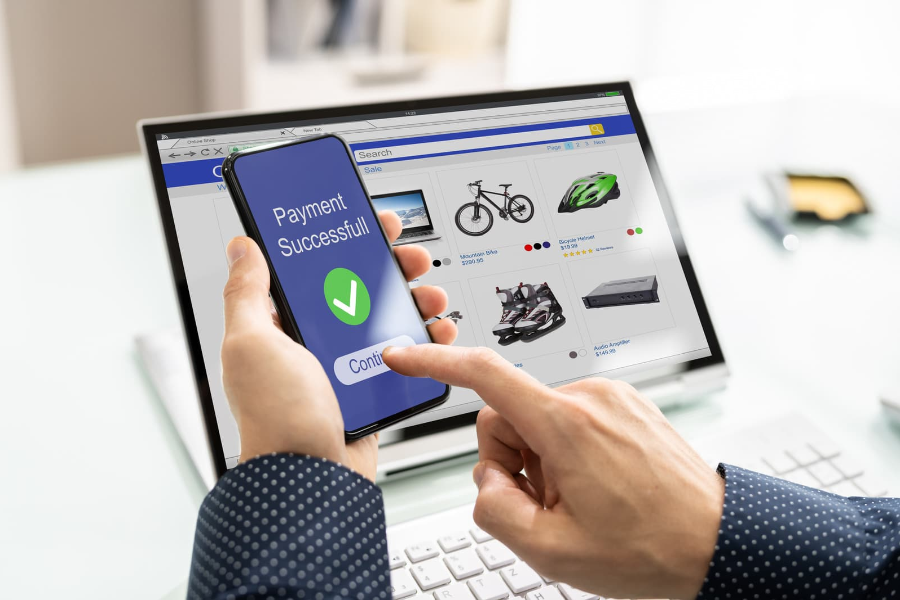
Most small and mid-size stores pay between $5,000 and $30,000 to build an online store in Chicago. A basic Shopify setup can cost less than $5,000, while a custom build with POS, inventory, and shipping integrations can pass $50,000. E-commerce development Chicago pricing comes down to three things: the platform you pick, how many products you sell, and how much custom work your store needs. Here is how those numbers break down, so you can set a realistic budget before you talk to anyone.
How Much Does an E-Commerce Website Cost in Chicago?
Short answer: expect $2,000 to $100,000+, depending on the size and complexity of the store. Most local businesses land in the middle of that range. These are typical market estimates, not a quote, and your final price depends on your scope.
- Template store ($2,000 to $8,000): Shopify, WooCommerce, or Wix with a premium theme, a small catalog and standard checkout.
- Custom design ($8,000 to $30,000): a unique layout, custom product pages, migration from an old store, and a few integrations.
- Advanced build ($30,000 to $100,000+): wholesale pricing, ERP or POS sync, subscriptions, multi-location inventory or custom checkout rules.
- Mobile app add-on ($15,000 to $150,000+): a native or React Native shopping app that connects to your store.
The jump between tiers usually comes from integrations, not design. A good-looking store with simple checkout costs far less than a plain store that has to sync stock with three systems.
What Affects E-Commerce Development in Chicago Pricing?
Platform, catalog size, design, integrations, and features. Two stores that look alike on the surface can have very different price tags once you look at what runs behind them.
- Platform: Shopify, WooCommerce, Magento, OpenCart, or a custom build each carry different setup and upkeep costs.
- Number of products: 50 products is a quick import. 5,000 products with variants, sizes, and custom fields take planning and cleanup.
- Design: a theme with your logo costs less than custom page layouts and brand-specific product pages.
- Integrations: payment gateways, shipping carriers, accounting software, POS systems, and email tools each add setup time.
- Special features: subscriptions, preorders, wholesale accounts, gift cards, local pickup scheduling, or product bundles.
- Content and migration: moving products, customers, and order history from an older store takes real hours.
- SEO setup: URL structure, redirects, product schema, and page speed work are easier and cheaper to do during the build than after.
If you are comparing e-commerce development services from different companies, ask each one to price these items separately. It makes the quotes easy to compare.
Want to see what a small-business build usually includes? Read our guide to e-commerce development services for small businesses.
What Does an Online Store Cost After Launch?
Short answer: plan on roughly 10% to 20% of the build cost per year for hosting, updates, security, and small changes. Many owners budget only for the build and get surprised by the monthly bills, so it helps to know what to expect.
- Platform fees: Shopify plans run from about $30 to a few hundred dollars a month. WooCommerce is free software, but you pay for hosting, usually $30 to $300 a month.
- Payment processing: commonly around 2.9% plus 30 cents per online card sale, though rates vary by provider and plan.
- Apps and plugins: subscription tools for reviews, email, shipping labels, or loyalty programs often add $50 to $500 a month.
- Maintenance and security: updates, backups, and bug fixes, either hourly or on a monthly plan.
- Marketing: SEO, Google Shopping, and paid ads. A store with no traffic plan rarely pays for itself.
Platform pricing changes often, so confirm current rates on each provider’s site. If you already have a rough product list, you can request a quote and get a range based on your exact setup.
Is Shopify or WooCommerce cheaper?
Shopify is usually cheaper to start and easier to maintain for stores with straightforward needs. WooCommerce costs more in developer time but gives you more control over custom features and hosting. If you plan to sell mostly standard products and want fast setup, Shopify tends to win. If you need custom pricing rules or deep WordPress content, WooCommerce is worth a look. You can see how each is handled on our e-commerce development page.
Want a price for your store? Tell us what you sell and how you ship, and we will send a clear estimate. Get a free quote
What Problems Do Chicago Online Stores Run Into?

Short answer: sales tax, local delivery, seasonal swings, and tough local search competition. A store that works fine for a national seller can cause headaches for a business serving Chicago customers. Choosing a team that has done e-commerce development for Chicago retailers means these issues get handled during the build instead of after your first complaint.
- Sales tax: Chicago’s combined sales tax is among the highest in the country, and Illinois has its own rules for local and out-of-state buyers. Your store needs correct tax setup from day one. Confirm current rates with your accountant.
- Local pickup and same-day delivery: many neighborhood shops want customers to order online and pick up in store. That needs pickup scheduling and inventory that matches the shelf.
- Winter and holiday spikes: November and December can bring most of a retailer’s yearly sales, and snow can delay carriers. Your site must handle traffic spikes and show honest delivery dates.
- Local search competition: shoppers search “near me” and compare nearby options. Product pages, location pages and Google Business Profile all affect whether you show up.
- Mixed sales channels: many stores sell in person, online and at markets, so stock counts go out of sync quickly without a POS connection.
Most local shoppers browse on their phones first, which is why we wrote about why Chicago shops need mobile-first e-commerce websites.
Which Chicago business types need what?
Different businesses need different features, and that changes the price.
- Neighborhood retail storefronts (Wicker Park, Lincoln Park, Logan Square and similar areas): POS sync, local pickup and in-store inventory counts.
- Warehouse-based sellers and distributors: bulk pricing, shipping rate tables, multiple stock locations and wholesale logins.
- Restaurants, bakeries and specialty food shops: pickup windows, delivery zones and limited-quantity items.
- Studios, pop-ups and market vendors: preorders, limited drops and event-based sales.
- Multi-location shops across the city and suburbs (Evanston, Naperville, Schaumburg, and others): per-location stock, store locator pages and location-based shipping rules.
Do You Need a Mobile App for Your Online Store?
Short answer: not at launch, in most cases. A fast, mobile-friendly website covers most shoppers. An app starts to make sense when customers buy often, want loyalty rewards, or you need push notifications and faster reorders. If you decide to add one, mobile development Chicago teams can build it on top of your existing store through an API, so the cost depends on how clean your store data is. A typical mobile app development Chicago project runs from $15,000 into six figures based on features and platforms.
- Good fit for an app: subscription boxes, restaurants with repeat orders, fitness and wellness brands, and stores with loyalty programs.
- Better to wait: new stores with few repeat buyers or businesses still testing what sells.
Some owners hire a separate app development company based in Chicago for the app and another team for the store. That can work, but it often adds coordination time. If you are weighing options, a mobile app development company Chicago businesses can reach in person may keep the store and the app aligned. You can read more about our React Native development approach if you want one codebase for iOS and Android.
For a full price breakdown by feature and platform, see how much mobile app development costs in Chicago.
How Do You Choose an E-Commerce Developer in Chicago?
Short answer: look at real stores they have built, ask who owns the accounts and code, and get the scope in writing. Price matters, but a cheap build that needs rework costs more in the end.
- Ask to see live stores, not only design mockups.
- Confirm you will own your domain, hosting account, platform account, and source files.
- Ask how they handle tax setup, payment gateways, and shipping rules.
- Ask what happens to your Google rankings if you are replacing an old site.
- Get a written scope with milestones, so changes to the plan are priced before work starts.
- Ask what support looks like after launch and what it costs.
For a longer checklist, see our post on 10 questions to ask an app developer before you sign. IBWD Computer Services has been a Chicago-based development company since 1996, and our team builds on Shopify, WooCommerce, Magento, OpenCart, and Wix. We also handle SEO and PPC, so your store has a plan for traffic and not only a launch date. That mix of e-commerce development services under one roof saves many owners from juggling three vendors.
Not sure what your store needs? Book a short call and we will walk through your products, platform options and budget. Book a free consultation
How Can You Keep E-Commerce Costs Down?
Short answer: launch smaller and grow. You do not need every feature on day one.
- Start with your best 20 to 50 products and add more after launch.
- Use a proven platform and a good theme before paying for custom design.
- Phase your integrations. Connect payments and shipping first, then POS and accounting.
- Write your own product descriptions and take clear photos. It is the cheapest way to improve sales.
- Plan SEO during the build. Fixing page structure later costs more.
- Lock the scope before design starts, since changes midway add hours quickly.
Once your budget is set, the next step is turning visitors into buyers. Here is how to build a high-converting e-commerce store in Chicago.
FAQs About E-Commerce Website Costs in Chicago
How long does it take to build an e-commerce website?
Most stores take 4 to 12 weeks. A template store with a small catalog can go live in a few weeks. Custom builds with integrations or data migration can take three to six months.
Is Shopify good for a small Chicago business?
Yes, for most small stores. It handles hosting, security and checkout for you, and it supports local pickup and delivery options. If you need heavy customization, WooCommerce or a custom build may fit better.
What is the cheapest way to start selling online?
A template store on Shopify, WooCommerce or Wix with a small product list. Add features as you get sales and learn what customers ask for.
Can I add a mobile app to my store later?
Yes. Most modern platforms let an app pull product and order data through an API. It is easier if your product data is clean and well organized from the start.
Do I need SEO for my online store?
If you want customers to find you through Google, yes. Product page structure, page speed, schema markup and local signals all affect rankings, and it is cheaper to set them up during the build.
What Should You Do Next?
Pick your platform, list your products, and write down the features you cannot launch without. With that, any developer can give you a number you can trust. If you want a straight answer on e-commerce development Chicago pricing for your store, our team can review your plan and give you a clear range with no pressure.
Ready to plan your store? Send us your product list and goals, and we will reply with options and pricing. Request your free quote
