
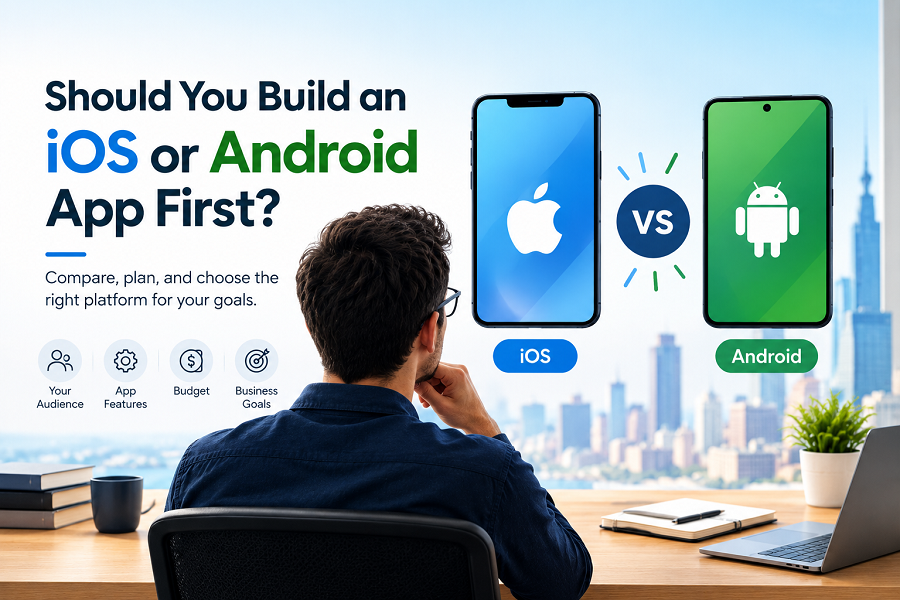
If you are planning a mobile app, one of the first decisions is whether to launch on iOS or Android. The right choice depends on your target audience, location, budget, business model, app features, and how quickly you want to test your idea. For businesses serving customers in Chicago, working with a Mobile App Development Company in Chicago can also help you evaluate your audience and technical requirements before deciding which platform should come first.
No universal answer says iOS is always better than Android, or vice versa. Instead, focus on where your potential users are, what they expect from your app, and which platform best supports your business goals. Starting with one platform can reduce initial development costs and let you learn from real users before expanding to the second.
iOS vs. Android: Which Platform Should Come First?
The simplest answer is this: choose the platform where your most valuable customers are already active.
iOS and Android have large user bases, but their audiences can differ by market, spending habits, device preferences, and user expectations. Your decision should therefore be based on your actual customers rather than general assumptions about which operating system is more popular.
For example, a business targeting professionals in a specific urban market may find that iOS users represent a large portion of its intended audience. Another company targeting a broader consumer audience may need Android because of its wider range of devices and price points.
Before development begins, review your existing customer data, website analytics, market research, and demographic information. If you already have a website or digital product, these sources can provide useful clues about which devices your audience uses.
If you want to compare the two platforms in more detail, read iOS vs. Android App Development: What Should Businesses Choose? for additional guidance before making your decision.
When Should You Build an iOS App First?
iOS can be a practical starting point when your target audience primarily uses Apple devices or when your business model depends heavily on in-app purchases, subscriptions, or premium digital services.
Working with an iOS App Development Company can also make sense if your initial launch market has a strong concentration of iPhone users. Businesses can also review their mobile app design services when planning the user experience and interface for an iOS application.
Apple’s ecosystem provides a relatively controlled hardware and software environment. Developers generally have fewer device configurations to account for compared with Android, although iOS development still requires careful testing across supported iPhone and iPad versions.
An iOS-first approach may be suitable when:
- Your target customers are primarily iPhone users.
- Your initial market has strong Apple adoption.
- Your app depends on Apple’s ecosystem or device features.
- You want to launch a focused minimum viable product first.
- Your business expects significant revenue from subscriptions or digital purchases.
However, choosing iOS simply because it may appear easier or more profitable is not enough. Your audience should remain the deciding factor.
Want to know whether iOS fits your target customers? Talk with IBWD Computer Services about your app idea and platform requirements.
When Is Android the Better Starting Point?
Android may be the stronger first platform when your audience uses a wide range of smartphones or when reaching a broad consumer market is a priority.
Android App Development involves supporting different screen sizes, hardware configurations, operating system versions, and manufacturer-specific devices. This can increase testing requirements, but it also gives businesses access to a very large and diverse mobile audience.
Android can be a good starting point if your business:
- Targets users across different smartphone price ranges.
- Needs broad market reach.
- Operates in markets where Android has strong adoption.
- Plans to distribute an app beyond Apple’s ecosystem.
- Needs flexibility across different types of devices.
For businesses specifically targeting the local market, Android App Development Chicago may be worth considering when customer research shows that Android users represent a significant part of the intended audience.
The important point is that Android’s wider device ecosystem can create additional development and quality-assurance requirements. Your development team should account for performance, screen sizes, operating system versions, permissions, security, and device compatibility during planning.
Want to discuss your Android app requirements? Contact IBWD Computer Services to review your project and development options.
What If Your Customers Use Both iOS and Android?
Many businesses eventually need both platforms.
The question is not necessarily whether you should build for both, but which platform should come first?
Launching on one platform can allow your business to test the product with a smaller initial audience. You can collect feedback, identify usability problems, measure retention, and understand which features customers actually use. Those findings can then inform the second platform.
For example, suppose you launch an iOS app and learn that users rarely use one of your planned features but heavily rely on another. Instead of copying the original product specification into the Android version, you can use actual customer behaviour to improve the second release.
This approach can help reduce unnecessary development work and make your overall product strategy more practical.
Should Budget Affect Your Platform Decision?
Yes. Your available budget should be part of the decision, but it should not be the only factor.
Building two separate native applications from the beginning can require more development, testing, maintenance, and ongoing updates. Starting with one platform can make the initial project easier to manage.
If cost is an important part of your planning, How Much Does Mobile App Development Cost in Chicago? explains some of the factors that can influence overall mobile app development costs.
For businesses specifically considering an iOS-first approach, How Much Does It Cost to Build an iOS App in Chicago? can provide additional information about the factors that may affect an iOS project budget.
However, trying to save money by selecting a platform without considering your users can create a bigger problem. If your primary customers use Android but you launch only on iOS, you may limit your potential audience from the beginning.
A good development plan should consider both the initial build and the long-term cost of maintaining the application. This includes operating system updates, bug fixes, security improvements, new features, analytics, third-party integrations, and user support.
Native App Development or Cross-Platform Development?
Another important question is whether you need separate native apps or whether a cross-platform approach could work.
Native development means creating the app specifically for iOS or Android using technologies designed for that platform. This can provide strong access to platform-specific capabilities and allows developers to optimise the application for the target operating system.
Cross-platform development allows businesses to build applications that can run across multiple platforms from a shared codebase. Depending on the project, this can reduce duplicated development work.
If you are considering a cross-platform approach, 5 Reasons React Native Is the Smart Choice for Your Next Mobile App provides more information about React Native and multi-platform app development.
Neither option is automatically better.
The right approach depends on your app’s features, performance requirements, integrations, development timeline, maintenance expectations, and future plans. A Chicago Mobile App Development Company can assess these factors before recommending a technical direction.
Planning an app for both platforms? Contact IBWD Computer Services to discuss whether native or cross-platform development makes more sense for your project.
What Should You Consider Before Choosing a Platform?
Instead of asking only, “Which platform is better?”, ask, “Which platform is better for my customers and business?”
Several factors can influence the answer.
1. Target Audience
Start with your users. Where do they live? What devices do they use? What age groups and customer segments are you targeting? If your existing audience data clearly favours one operating system, that information should carry significant weight.
2. App Purpose
A simple booking application may have different requirements from a mobile banking app, healthcare platform, social network, delivery application, or business productivity tool.
The complexity of your features can affect the development approach and platform choice.
3. Revenue Model
Consider how the app will make money. Will users pay for subscriptions? Will you sell products? Will the app support advertising? Will it be connected to an existing service?
Your monetisation model can influence both platform priorities and technical requirements.
4. Launch Timeline
If you need to validate an idea quickly, starting with one platform may allow you to focus development and gather user feedback sooner.
However, the project should be planned with future expansion in mind so the first version does not create unnecessary technical limitations.
What Does a Good First App Launch Look Like?
A successful first launch is not necessarily the app with the most features. It is an app that solves a clear customer problem and gives the business useful information about real-world usage.
Before launch, define what success means. You might track downloads, registrations, completed purchases, bookings, daily active users, retention, or another meaningful business metric.
After launch, pay attention to what users actually do rather than relying only on assumptions made during planning.
Reviews, support requests, analytics, usability feedback, and conversion data can help determine what should be improved before expanding to another platform.
This is where an experienced Mobile App Development Company in Chicago can provide value beyond writing code. Good development planning should connect technical decisions with the business objective, user experience, security, scalability, and long-term maintenance.
So, Should You Build iOS or Android First?
There is no one-size-fits-all answer.
Choose iOS first when your most valuable target users are primarily Apple users, your launch market supports that audience, or your product benefits from an iOS-focused initial release.
Choose Android first when your target market has strong Android adoption, broad device reach is important, or your customer research points toward Android users.
Choose both when your audience is already split across platforms and your budget, timeline, and product requirements support a simultaneous launch.
The best decision comes from evidence: customer data, market research, product requirements, budget, and long-term business goals. Avoid choosing a platform simply because it is popular or because another business chose it.
How IBWD Computer Services Can Help
Choosing a platform is only one part of building a successful mobile application. You also need to consider user experience, technical architecture, security, integrations, testing, analytics, deployment, and ongoing maintenance.
IBWD Computer Services can help businesses evaluate their mobile app requirements and determine a practical development approach based on their target audience and business objectives.
Whether your project starts with iOS, Android, or both, the goal should be the same: build an application that is useful to the people who will actually use it.
If your business needs Android App Development, an iOS application, or a strategy for launching across both platforms, start by defining the users, problem, and expected outcome. The technology decision becomes much easier once those fundamentals are clear.
Ready to turn your app idea into a practical development plan? Get in touch with IBWD Computer Services to discuss your project and next steps.
Frequently Asked Questions
Is iOS or Android better for a new app?
Neither platform is automatically better. The best choice depends on your target audience, location, app requirements, budget, and business model. Customer and market data should guide the decision.
Is it cheaper to build an iOS app or Android app first?
The cost depends on the application’s complexity, features, integrations, design, testing requirements, and development approach. Building one platform first can reduce initial development scope, but the exact cost varies by project.
Can I launch on iOS first and Android later?
Yes. Many businesses launch on one platform, collect user feedback, improve the product, and then develop the second version. The initial technical architecture should be planned with future expansion in mind.
Should a Chicago business build an Android app first?
If your target customers in Chicago primarily use Android devices, Android may be a sensible starting point. However, the decision should come from your own audience data rather than a general assumption about the market.
How do I choose the right mobile app development partner?
Look at relevant experience, technical capabilities, development process, communication, testing practices, security approach, post-launch support, and whether the company understands your business goals. A good development partner should be able to explain technical choices in clear business terms.
Final Takeaway
Choosing between iOS and Android is ultimately a customer and business decision, not simply a technical one. Start with your audience, understand the problem your app needs to solve, set realistic launch goals, and choose the platform that gives you the strongest opportunity to validate the idea.
For businesses that need a Mobile App Development Company in Chicago, taking time to make this decision before development begins can prevent unnecessary costs and help create a clearer path from the first version to future growth.
