
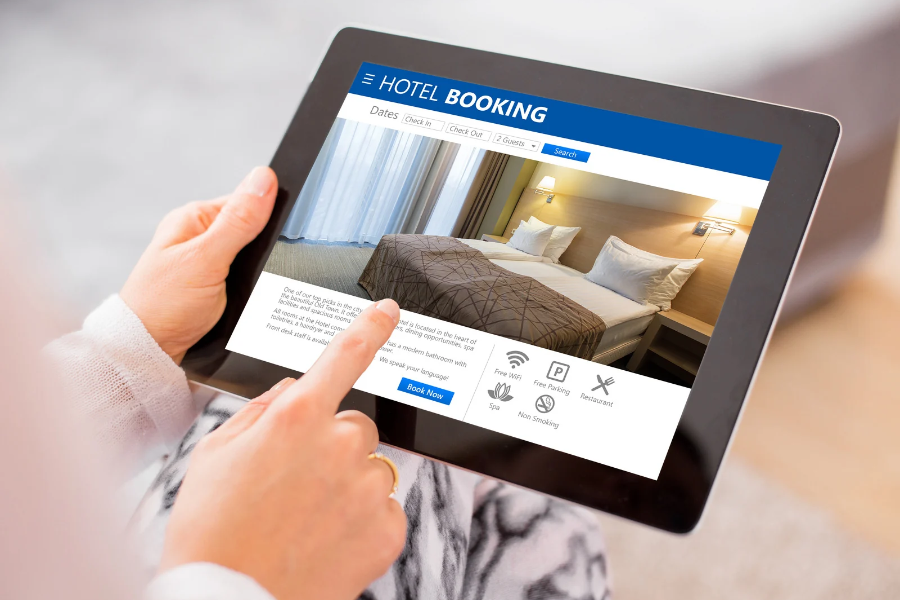
A hotel booking app needs six core integrations to work properly: a payment gateway, a property management system (PMS), a channel manager, maps and location services, push notifications, and a reviews or loyalty layer. Skip one and guests hit dead ends at checkout, rooms get double-booked, or your front desk ends up retyping reservations by hand. If you are planning a build with a hotel booking app development company, this guide covers which integrations to prioritize and why.
What Integrations Does a Hotel Booking App Actually Need?
Short answer: the ones that move a guest from search to checkout without leaving the app and keep your inventory accurate everywhere you sell rooms. Most failed hotel apps are not badly designed. They simply don’t talk to the systems the hotel already runs on.
- Payment gateway (cards, wallets, saved payment methods)
- PMS and channel manager (live rooms, rates, availability)
- Maps, location, and navigation
- Push notifications, SMS, and email
- Reviews, loyalty, and CRM
- Analytics and security tools
Which Payment Gateway Should a Hotel Booking App Use?
Pick a gateway that supports the payment methods your guests already use, then add a second option as backup. Stripe, Braintree, Adyen, and PayPal are the usual choices, and each handles tokenization so card numbers never sit on your servers. Guests also expect Apple Pay and Google Pay, since one-tap checkout cuts abandoned bookings on mobile.
- Support deposits, pre-authorizations and full prepayment
- Handle refunds and cancellation rules automatically
- Add multi-currency support if you take international guests
- Use 3D Secure for stronger fraud protection
Why Does PMS and Channel Manager Integration Matter?
Because it is the difference between a live booking engine and a pretty brochure. Your PMS (Opera, Cloudbeds, Mews, RoomRaccoon, and similar) holds room status, rates, and guest records. A channel manager pushes that inventory to Booking.com, Expedia, and others. When your app connects to both, a room sold on one channel disappears from every other channel within seconds, which stops double bookings and saves staff hours every week.
- Real-time availability and rate sync
- Two-way reservation updates (new bookings, changes, cancellations)
- Guest profiles shared between app and front desk
- Housekeeping status so rooms are ready at check-in
How Do Maps and Location Services Help Guests?
They answer the questions guests ask before and after they book: where is the hotel, how far is the airport, and what is nearby. Google Maps or Apple Maps integration powers search by area, directions to the property, and nearby restaurant or attraction suggestions. Geofencing can also trigger a welcome message when a guest arrives, which feels helpful rather than pushy when it is done sparingly.
- Map-based search with price filters
- Turn-by-turn directions and parking details
- Nearby points of interest on the booking confirmation screen
What Role Do Push Notifications and Messaging Play?
They keep guests informed without making them open their inbox. A good setup sends a booking confirmation, a pre-arrival reminder with check-in details, a digital key or room-ready alert, and a post-stay review request. Services like Firebase Cloud Messaging, Twilio and SendGrid cover push, SMS and email. Keep messages short and tied to something the guest needs to do or know.
- Instant confirmation after payment
- Reminder 24 to 48 hours before arrival
- Offers sent only to guests who opted in
Planning a hotel booking app and not sure which integrations to build first? Tell our team about your property or portfolio, and we will map out a practical build plan. Book a free app strategy call with IBWD Computer Services.
Do You Need Loyalty, Reviews, and AI Features?
You do if you want guests to book direct instead of going back to an online travel agency. Loyalty points, member rates, and saved preferences give guests a reason to open your app next time. Review tools like Google Reviews or TripAdvisor APIs add social proof, and AI features such as chat support or personalized room suggestions can lighten the load on your reservations team. If you want ideas on which AI features are worth the budget, read what AI-powered features modern business apps need.
- CRM sync (HubSpot, Salesforce) for guest history
- Loyalty tiers and points balance inside the app
- AI chatbot for FAQs like late check-in or parking
- Review prompts after check-out
How Should a Hotel App Handle Security and Compliance?
Treat it as part of the build, not a final check. Any app that touches card data needs to meet PCI DSS requirements, and guests from the EU bring GDPR expectations around consent and data deletion. Using tokenized payments, encrypting guest data in transit and at rest, and limiting who can access reservation records covers most of the risk. Ask your developer how they handle these before you sign a contract. This list of 10 questions to ask an app developer is a good starting point.
- PCI DSS compliant payment flow
- Secure login with two-factor option
- Clear privacy policy and consent screens
- Regular security testing before each release
Should You Build for iOS, Android, or Both?
If your guests skew toward business travelers in the US, iOS often comes first, but most hotels end up needing both. A cross-platform approach like React Native can cover both with one codebase and keep early costs down. Our guide on iOS vs Android app development breaks down the trade-offs. If you lean toward Apple first, here is what to look for in an iOS app development company, and for Google’s platform, our Android app development team can walk you through options.
- iOS: strong fit for premium and business travel audiences
- Android: wider global reach and lower device-cost markets
- Cross-platform: faster launch, shared codebase
How Much Does a Hotel Booking App Cost, and How Long Does It Take?
A simple booking app with payments and a PMS connection can launch in roughly three to five months, while a full platform with loyalty, multi-property support, and AI features can take six to nine months or more. Cost depends on the number of integrations, the platforms you target, and how custom the design is. Each third-party system you connect adds testing time, so a clear integration list at the start keeps the budget realistic. For a closer look, see how much mobile app development costs in Chicago and how long it takes to develop a mobile app. A reliable hotel booking app development company will give you a scoped estimate once these details are defined.
- MVP with core integrations: shorter timeline, lower cost
- Full platform: more integrations, longer testing cycle
- Ongoing costs: hosting, API fees, updates and support
How Do You Choose a Hotel Booking App Development Company?
Look at their past work with booking, payments, and third-party APIs, not just how good their screenshots look. A team with experience in hospitality will already know the quirks of PMS connections and channel sync. Local presence also helps with workshops and quick feedback, which is why many hotel groups search for mobile app developers in Chicago or a Mobile App Development Company in Chicago they can meet in person. A good iOS app design agency or design team should also show you how the booking flow works before development starts. If you want a broader checklist, read how to choose the best mobile app development company in 2026.
- Proven experience with payment and PMS integrations
- Clear process for design, development, testing and launch
- Transparent pricing and post-launch support
- References or case studies you can verify
Want a quote for your hotel booking app? Share your timeline and must-have integrations, and we will send back a clear scope and estimate. Request your free quote.
Frequently Asked Questions
What is the most important integration in a hotel booking app?
The PMS and channel manager connection. Without live availability, every other feature loses value because guests can book rooms that no longer exist.
Can I add integrations after launch?
Yes, but it is cheaper to plan the architecture for them upfront. Retrofitting a payment or PMS connection into an app that was not built for it usually means rework.
Is a custom app better than a white-label booking tool?
White-label tools launch faster, but you get limited control over design, data and features. A custom build costs more upfront and suits hotels that want their own branded guest experience and direct bookings.
How do I find the right hotel booking app development company?
Ask for examples of integrations they have built, check their process, and compare scoped estimates from two or three teams. You can start with this guide to hiring an app development company.
Final Thoughts
The right integrations turn a hotel app from a nice-looking booking form into a tool that fills rooms and saves your staff time. Start with payments and your PMS, add messaging and maps, then layer in loyalty and AI once the foundation is stable. When you are ready to move forward with a hotel booking app development company, IBWD Computer Services can help you plan, design and build it. You can also book a consultation to talk through your project.
