
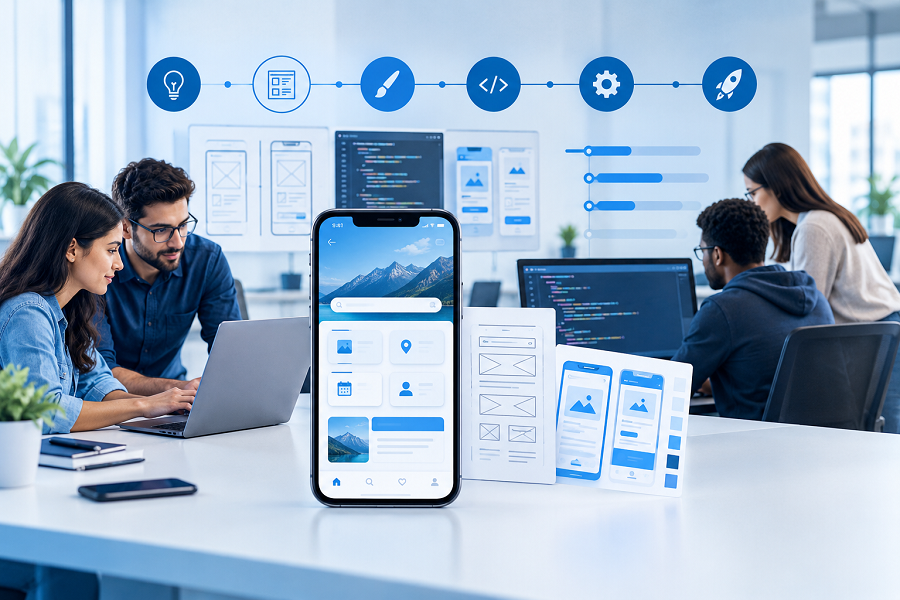
How long does it take to develop a mobile app? For most business apps, development can take anywhere from 3 to 9 months, depending on the app’s features, design, integrations, platforms, testing requirements, and project scope. A simple app with a small number of screens may be ready in a few months, while a feature-rich application with payments, user accounts, real-time communication, third-party integrations, or complex backend systems can take considerably longer.
The timeline is not determined by coding alone. Planning, UI/UX design, development, testing, revisions, security checks, and app-store preparation all contribute to the final launch date. Working with an experienced mobile app development company in Chicago can help businesses define the scope early and build a realistic development schedule.
What Is the Average Mobile App Development Timeline?
There is no single timeline that applies to every application. The development period depends mainly on what the app needs to accomplish.
As a general guide:
- Simple mobile app: Around 2–4 months
- Medium-complexity app: Around 4–6 months
- Complex business application: Around 6–9+ months
- Large-scale platform: 9–12 months or longer
These are planning ranges rather than guarantees. An app that appears simple may require complicated backend work, while an application with many screens can sometimes be developed efficiently when its requirements are clearly defined.
For businesses planning mobile app development in Chicago projects, the best starting point is to define the business goal, target users, core features, and platforms before estimating the development schedule.
Before starting your project, it can also help to understand where the industry is heading. Read “Mobile Application Development Chicago: 7 Must-Know Trends” for more information.
What Are the Main Stages of Mobile App Development?
A mobile app does not go directly from an idea to a finished product. Several stages take place before users can download and use it.
1. Planning and Requirement Gathering
The first stage is understanding what the app needs to do.
The development team may discuss:
- Who will use the app?
- What problem will it solve?
- Which features are essential for the first version?
- Will the app require user accounts or payments?
- Does it need GPS, notifications, messaging, or other device features?
- Will it connect to an existing website, CRM, API, or database?
- Should it support Android, iOS, or both?
This stage may take anywhere from a few days to several weeks depending on the size of the project.
Good planning can prevent major changes later. It also helps businesses separate essential features from ideas that can be added after launch.
2. UI/UX Design
Once the requirements are clear, designers create the user experience and visual structure of the application.
This can include wireframes, screen layouts, navigation, buttons, forms, icons, and interactive elements.
Design is more than making an app look good. Users should be able to understand where they are, what they can do next, and how to complete important actions without confusion.
For a business investing in Android mobile app development in Chicago, for example, the design should also account for the different screen sizes and device environments Android users may have.
3. App Development
This is the stage most people associate with app development, but it is only one part of the overall process.
Developers build the frontend that users interact with and the backend systems that support the application. Depending on the project, development may involve databases, APIs, authentication, payment systems, cloud services, notifications, analytics, and administrative dashboards.
The development timeline can range from several weeks to several months.
The technology selected also matters. Native development, cross-platform frameworks, and other approaches each have different implications for development time, performance, maintenance, and future updates.
How Do Features Affect Development Time?
Features have a direct effect on the amount of development and testing required.
For example, an app that displays basic information may be relatively straightforward. Adding secure logins, subscriptions, live chat, location tracking, booking systems, or payment processing introduces additional technical requirements.
Consider an application that allows customers to:
- Create an account
- Search for products or services
- Schedule an appointment
- Make a payment
- Receive push notifications
- Communicate with staff
Each function needs its own development and testing. Some features also depend on external services or APIs, which can introduce additional work.
This is why an accurate estimate should be based on the actual feature list rather than simply asking how many screens the app will have.
Features can significantly affect an app’s development timeline. For a practical example, see “Top 8 Features Your Fitness App Needs to Compete.”
What Can Delay a Mobile App Project?
Even a well-planned project can take longer than expected when requirements change during development.
Common causes of delays include:
Changing the Scope
Adding major features after development has already started can affect the schedule. For example, adding a customer portal, payment system, or real-time messaging feature may require changes to both the frontend and backend.
Delayed Feedback
Developers and designers need timely feedback to keep the project moving. Long gaps between review cycles can extend the overall timeline.
Third-Party Integrations
Apps often connect to payment providers, CRMs, booking platforms, maps, analytics tools, or other services. If an integration has technical limitations or requires additional approval, the schedule may change.
Testing and Bug Fixes
Testing should happen throughout the project rather than only at the end. Different devices, operating systems, screen sizes, network conditions, and user scenarios need to be considered.
App Store Approval
Publishing an app also involves preparing store listings, screenshots, descriptions, technical requirements, and submission materials. The final launch schedule should allow time for this step.
Can a Mobile App Be Developed Faster?
Yes, but faster does not necessarily mean better.
One way to shorten a project is to launch a minimum viable product (MVP) with the features users need most. Additional features can then be introduced through future releases.
For example, a business app might launch first with account creation, product browsing, checkout, and order tracking. Advanced loyalty features, chat, or additional automation could be added later.
If you are considering Ionic for a cross-platform application, read “What Does an Ionic App Development Company Actually Do?” to understand how this development approach works.
A clear scope also helps. Before development begins, businesses should decide what must be included in version one and what can wait.
If you are planning an application and want to understand what could affect your timeline, talk with IBWD Computer Services about your project requirements and development goals.
Should You Build for Android, iOS, or Both?
The answer depends on your audience.
If most of your customers use Android devices, starting with Android may make sense. If your audience is split between Android and iPhone users, developing for both platforms may be necessary.
Some businesses also choose cross-platform development to reduce duplicated development work. The right approach depends on the application’s features, performance requirements, target users, budget, and long-term plans.
A Chicago mobile app development company can help evaluate these factors before development begins rather than making the platform decision after the project is already underway.
If you are considering cross-platform development, learn more about the benefits of React Native in our guide, “5 Reasons React Native Is the Smart Choice for Your Next Mobile App.”
How Much Time Should You Allow for Testing?
Testing should not be treated as a final quick check.
A mobile application needs to be tested for functionality, usability, performance, security, compatibility, and common user scenarios.
For example, a shopping app should be tested for successful payments, failed payments, interrupted connections, incorrect information, order confirmation, account access, and other situations users may encounter.
The exact testing period depends on the application. More features and integrations generally mean more scenarios to test.
Planning a mobile app? Request a project consultation from IBWD Computer Services to discuss the features, platform, and expected development timeline.
What Should You Prepare Before Hiring a Development Company?
You do not need a complete technical specification before speaking with a development team. However, having a clear idea of the business problem and desired outcome can make the first discussion much more productive.
Prepare information such as:
- Your target customers and users
- The main purpose of the app
- Essential features for the first version
- Preferred platforms
- Examples of apps you like
- Existing website, software, or systems the app must connect with
- Expected launch timeframe
- Any security, payment, or compliance requirements
The more clearly the project is defined, the easier it becomes to estimate the work involved.
Why Choose an Experienced Development Partner?
The development company you select can influence more than the coding process. A reliable partner should help you understand technical decisions, identify potential challenges, plan testing, and keep the project requirements organised.
For businesses comparing a mobile app development company in Chicago, it is useful to ask how the team handles project planning, design, development, testing, communication, updates, and post-launch maintenance.
Do not compare companies based only on the lowest initial estimate. A lower quote may exclude important work that becomes necessary later.
Instead, compare what is included in the proposed project, how the timeline was calculated, and how changes to the scope will be handled.
Frequently Asked Questions
How long does it take to develop a basic mobile app?
A basic application can sometimes be developed in approximately 2–4 months. The actual timeline depends on the number of screens, features, design requirements, backend work, testing, and integrations.
How long does it take to develop an app for both Android and iOS?
A dual-platform application may take longer than a single-platform project, although the exact difference depends on the development approach and application requirements.
Can an app be developed in one month?
A very small application with limited functionality may be possible within a short timeframe. However, a production-ready business application usually requires planning, design, development, testing, revisions, and deployment.
What is the biggest factor affecting app development time?
The biggest factor is usually project scope. Complex features, integrations, custom backend systems, security requirements, and frequent changes can all increase development time.
How can I get a more accurate app development timeline?
Start with a detailed feature list and discuss it with a development team. A technical review can identify dependencies and provide a more realistic project schedule.
Start Planning Your Mobile App
A mobile app can take a few months or more than a year to build, but the timeline becomes much easier to estimate once the project’s scope is clear. The key is to understand what the first version actually needs, select the right technology, allow enough time for testing, and avoid unnecessary changes during development.
For businesses planning Mobile App development in Chicago, starting with a clear development roadmap can make the process easier to manage from the first discussion through launch.
Ready to turn your app idea into a practical development plan? Contact IBWD Computer Services to discuss your project, features, platform requirements, and expected timeline.
If you are comparing a mobile app development company in Chicago, IBWD Computer Services can help you understand the development process and identify the steps required to move your idea toward a working application.
