

When businesses plan to build a medical or health-related app, the first question is usually simple: How much will it cost, how long will it take, and what does the process look like?
A healthcare app development company helps turn your idea into a secure, compliant, and user-friendly digital product—but the journey involves multiple steps, timelines, and cost factors.
This guide breaks everything down in a clear, practical way so you can make informed decisions.
What Does a Healthcare App Development Company Actually Do?
A healthcare app development company designs, builds, tests, and maintains mobile or web applications for the healthcare industry. These apps can range from patient portals to telemedicine platforms and fitness tracking tools.
In simple terms, they handle both the technical work and compliance requirements so your app is safe, scalable, and useful.
They typically offer:
- App strategy and planning
- UI/UX design for patients and providers
- Backend and frontend development
- Integration with healthcare systems (EHR, APIs)
- Security and compliance (HIPAA, GDPR)
- Ongoing maintenance and updates
Companies like IBWD Computer Services focus on building solutions that meet real-world healthcare needs while keeping the user experience simple.
How Much Does It Cost to Build a Healthcare App?
The cost depends on features, complexity, and the type of app you want to build.
A healthcare app can cost anywhere between $15,000 and $150,000+, depending on requirements.
Detailed Breakdown
1. Basic Healthcare App ($15,000 – $30,000)
Simple features like appointment booking, basic profiles, and notifications.
2. Mid-Level App ($30,000 – $80,000)
Includes telemedicine, payment integration, dashboards, and real-time chat.
3. Advanced App ($80,000 – $150,000+)
AI-based insights, wearable integration, remote monitoring, and large-scale systems.
Not sure what your app might cost? Share your idea and get a quick estimate based on your features, goals, and timeline.
What Affects the Cost?
Several factors influence pricing:
- Platform choice (Android, iOS, or both)
- Design complexity
- Number of features
- Third-party integrations
- Security and compliance requirements
- Development team location
A skilled mobile app development company will help you prioritize features so you don’t overspend early.
Technology choices also impact performance and cost—this guide on choosing the right tech stack explains it in more detail.
What Is the Step-by-Step Process of Healthcare App Development?
Step 1: Idea Validation and Research
First, your concept is evaluated. The team studies your target users, competitors, and compliance needs.
Step 2: Planning and Strategy
Next, a roadmap is created. This includes features, timelines, and technology choices.
Step 3: UI/UX Design
Designers create wireframes and layouts. The focus is on simplicity, especially for patients and doctors.
Step 4: Development Phase
This is where coding begins. Developers build the frontend (what users see) and backend (server-side logic).
Step 5: Testing and Compliance Check
The app goes through multiple testing stages to ensure:
- No bugs or crashes
- Data security
- Compliance with healthcare regulations
Step 6: Deployment
The app is launched on platforms like the App Store or Google Play.
Step 7: Maintenance and Updates
After launch, updates are necessary to fix issues, improve performance, and add features.
A reliable healthcare app development company ensures that each step is handled carefully, especially in terms of compliance and security.
Have an idea in mind? You can discuss your app concept and get a simple roadmap before starting development.
How Long Does It Take to Develop a Healthcare App?
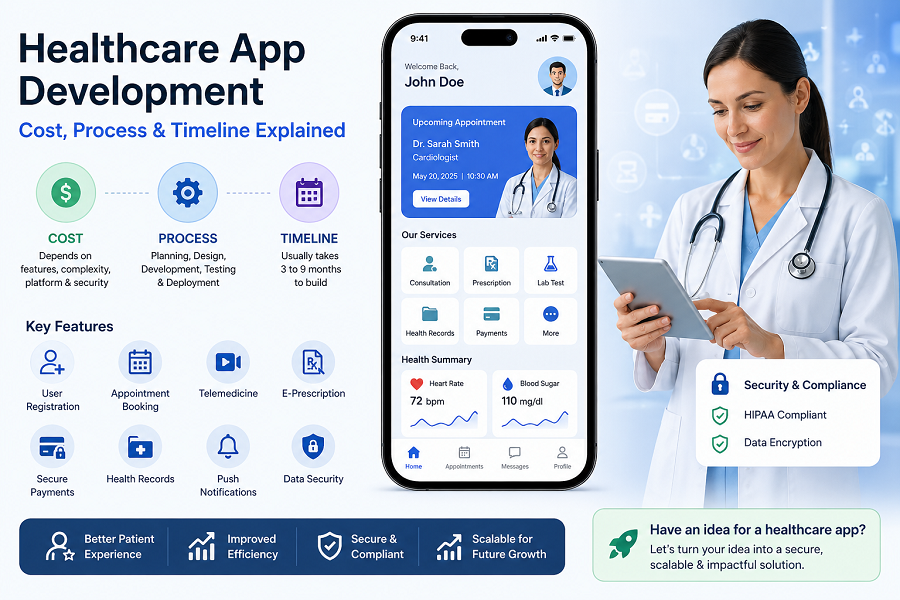
Most healthcare apps take 3 to 9 months to build.
Timeline Breakdown
Basic App: 2–3 months
Medium Complexity: 4–6 months
Advanced App: 6–9+ months
What Impacts the Timeline?
- Number of features
- Design revisions
- Integration complexity
- Compliance requirements
- Testing cycles
If you’re working with an iOS app development company, timelines may vary slightly due to Apple’s stricter review guidelines.
What Features Should a Healthcare App Include?
The right features depend on your app type, but some are commonly expected.
In most cases, a healthcare app should include:
- User registration and secure login
- Appointment scheduling
- Video consultations
- E-prescriptions
- Payment gateway
- Push notifications
- Health records management
Adding too many features at once can delay launch and increase costs. Start with essential features and expand later.
Why Compliance and Security Matter So Much?
Healthcare apps handle sensitive personal data. That’s why compliance is not optional.
A professional healthcare app development company ensures the following:
- Data encryption
- Secure APIs
- HIPAA or GDPR compliance
- Regular security audits
Ignoring this can lead to legal issues and loss of user trust.
Should You Build for Android, iOS, or Both?
Android Apps
Wider reach, especially in global markets.
iOS Apps
Better performance and user spending potential.
Both Platforms
Best option for scalability and brand credibility.
An experienced mobile app development company may suggest cross-platform development to save time and cost.
If you’re unsure which platform fits your business goals, this comparison of iOS vs Android app development can help you decide.
Common Challenges in Healthcare App Development
Building a healthcare app is not the same as building a regular app.
Here are a few challenges you might face:
- Meeting strict compliance standards
- Integrating with existing healthcare systems
- Ensuring real-time data accuracy
- Managing user privacy
- Handling scalability
Working with experts like IBWD Computer Services helps avoid common mistakes early.
How to Choose the Right Development Partner?
Choosing the wrong team can delay your project and increase costs.
Look for These Qualities:
- Experience in healthcare apps
- Understanding of compliance standards
- Clear communication
- Transparent pricing
- Post-launch support
A trusted healthcare app development company will guide you, not just build the app. For a deeper breakdown of what to look for, you can also read How to Choose the Best Mobile App Development Company in 2026
Is It Worth Investing in a Healthcare App?
Yes—if it solves a real problem and is built correctly.
Healthcare apps improve:
- Patient engagement
- Operational efficiency
- Access to medical services
They also open new revenue streams for clinics, startups, and healthcare providers.
Ready to move forward? Start a quick conversation and see how your healthcare app can be planned, built, and launched the right way.
FAQs About Healthcare App Development
How do I start building a healthcare app?
Start with a clear idea, define your audience, and consult a development team for feasibility.
Can small clinics afford an app?
Yes. Start with a basic version and scale as needed.
Do I need legal compliance from day one?
Yes. Compliance should be part of the development process from the beginning.
Can I update the app after launch?
Absolutely. Most apps evolve based on user feedback.
Final Thoughts
Building a healthcare app is not just about coding. It’s about creating a reliable, secure, and easy-to-use solution that people trust with their health data.
A well-planned approach, a realistic budget, and the right team make all the difference. Whether you’re starting small or planning a large-scale platform, working with a dependable healthcare app development company ensures your app is built the right way from day one.
Take the Next Step
If you’re planning a healthcare app and want clarity on cost, features, or timelines, it’s worth having a quick discussion with a team that understands both technology and healthcare.
IBWD Computer Services can help you map out the right approach and avoid costly mistakes early. Reach out to explore your idea and see what’s possible.
